Capabilities
Capability layers selected through discovery.
We combine workflow systems, data, AI, physical devices, edge processing, and managed deployment - selecting only what your operation actually needs.
How it works
The operation determines the architecture.
A workflow may only need roles, dashboards, and integration. Another requires RFID, cameras, edge devices, forecasting, AI-assisted review, or a private deployment model. Discovery maps the gaps - then we select the smallest useful pilot.
Workflow, data, devices, AI, and deployment are selected around the operational problem.
The first pilot focuses on the capability mix that proves value without overbuilding.
Additional layers are added when the workflow, data model, and production support path are ready.
Capability Map
Explore the layers that can become part of your system.
These are not features sold in isolation - they are combined around the workflow, data model, people, and production environment.
Selected view
All capabilities
Capabilities selected through discovery and combined around the operation.
Workflow Engineering
Discovery, process mapping, role design, approvals, SLA tracking, handoffs, and exception handling.
Custom Operational Systems
Client systems built around the workflow, data model, users, rules, and deployment realities of the organization.
Dashboards and Analytics
KPI dashboards, turnaround analytics, operational reporting, exception views, and management visibility.
Traceability and Records
Audit trails, approval history, evidence-linked actions, custody records, and operational event logs.
Forecasting and Machine Learning
Demand forecasting, anomaly detection, trend analysis, model layers, and decision support where data is ready.
LLM / SLM Integration
AI-assisted reporting, natural language search, summarization, workflow guidance, and human-reviewed assistance.
Computer Vision
License plate recognition, vehicle-linked events, camera-based detection, occupancy workflows, and searchable evidence.
RFID, IoT, Sensors, and Actuators
Connected devices, RFID reads, custody events, sensor data, actuator workflows, and operational event capture.
Edge Devices and Local Processing
Edge hardware, microcontrollers, local inference, site-level processing, and resilient workflows near devices.
SaaS and Third-Party Integration
Integration with existing apps, APIs, databases, ERP, CRM, WMS, CMMS, HR, POS, identity systems, and webhooks.
Managed Deployment and Support
Hosting, monitoring, updates, backups, user management, device checks, support, and continuous improvement.
Live2D and Interactive Assistant R&D
Character interfaces for customer service, guided onboarding, entertainment, VTuber-style experiences, kiosks, and robotic assistant front ends.
Physical integration
From physical event to operational record.
Camera, sensor, and RFID events are captured at the edge and turned into searchable records tied to your workflows and dashboards.
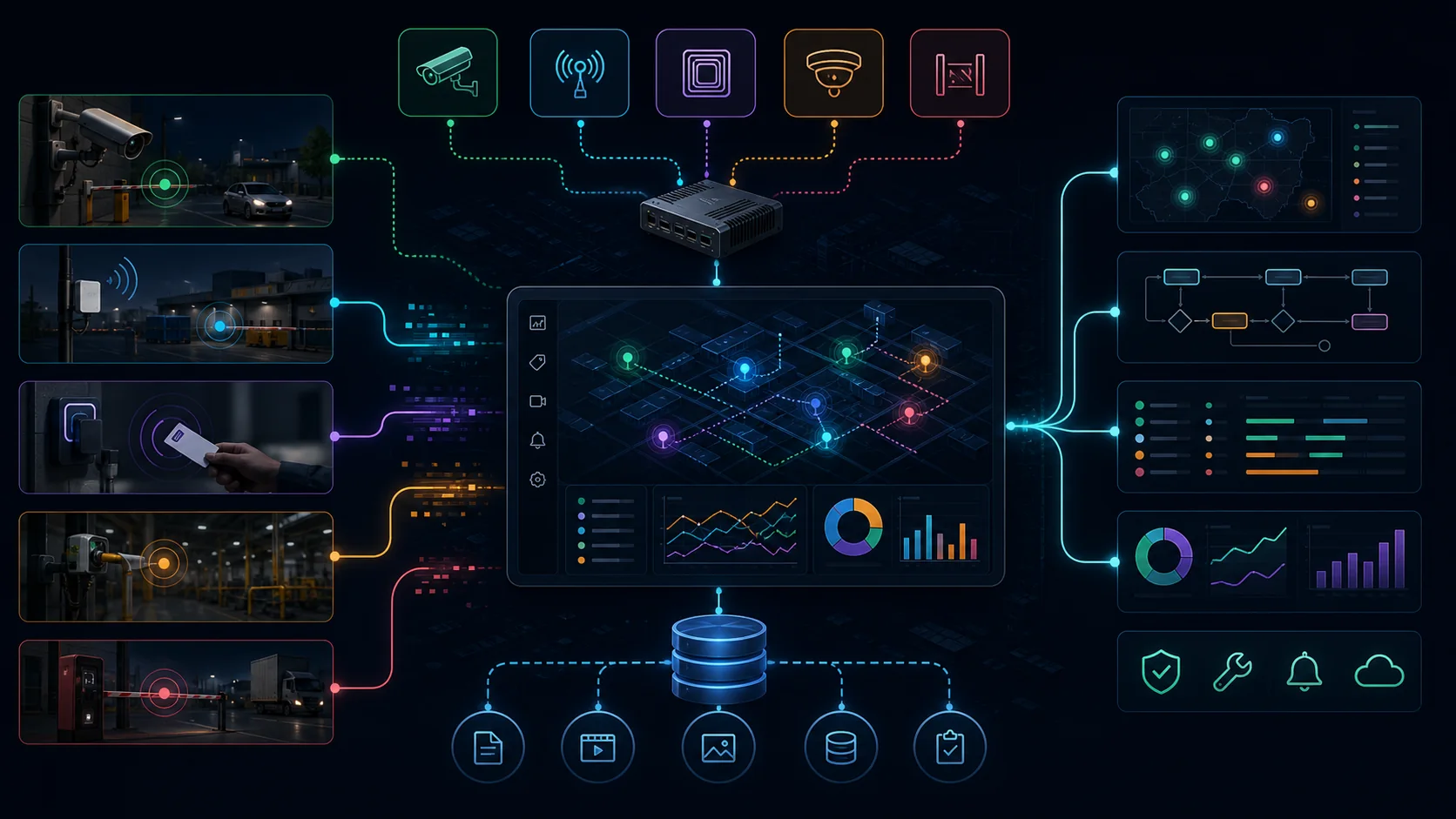
Camera / Sensor
captures event
Edge Device
local processing
Event Buffer
data queued
Operations App
record created
Dashboard
action visible
Research & Design
Live2D and character interfaces.
The floating assistant is a visible signal of our research into character-driven interfaces. The same capability can support customer service, entertainment, guided onboarding, VTuber-style experiences, or robotic assistant front ends.
Not the main focus - an R&D and product direction that sits alongside operational systems when the interaction model improves the experience.
Customer service characters
Branded assistants for reception, guided support, FAQs, and kiosks.
Entertainment & VTuber
Live character hosts, campaign presenters, and digital personalities.
Robotic & device front ends
Character interfaces for embedded assistants, guided onboarding, and training.
Start with the capability mix your operation actually needs.
Share the workflow, site, device environment, or decision process you want to improve. We'll identify the smallest useful pilot and the production path behind it.